Project Context
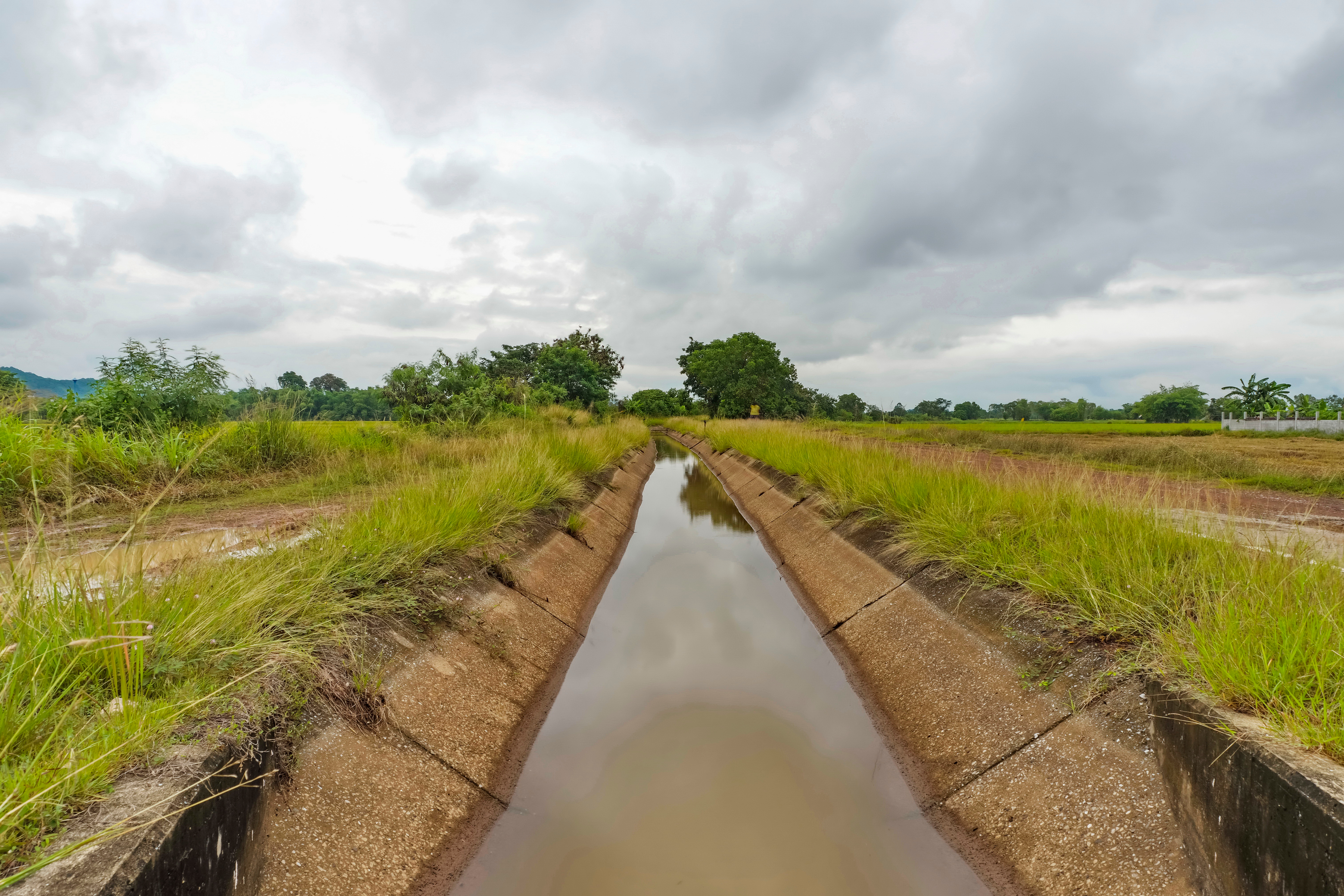
The Anderson-Cottonwood Irrigation District (ACID) maintains a main canal that diverts water directly from the Sacramento River north of Redding and delivers it to users across the Sacramento Valley. As agricultural parcels transition to urban uses, water demands change. To address seepage losses from unlined earthen sections and to support regional water conservation goals, the district initiated a modernization effort focused on concrete lining the canal.
Concrete lining a primary irrigation conveyance requires an accurate accounting of the existing hydraulic capacities. Before new design geometries can be implemented, the full system—including all control structures, siphons, and operating deliveries—must be evaluated.
HEC-RAS Hydraulic Model Workflow
The analysis began with a continuous field survey capturing cross-sections of the entire canal from the river diversion to the tail drain. All inline structures and turnouts were measured to establish the boundary conditions necessary for the hydraulic evaluation.
Using the survey data, I developed a steady-state HEC-RAS model encompassing the complete main canal network. System components integrated into the model included:
- Radial Gates: Modeled at various check structures to capture the relationship between gate position, headwater, and tailwater.
- Siphons and Flumes: Configured for topographic crossovers and natural drainage bypasses.
- Deliveries: Pump stations and gravity turnouts serving both large laterals and smaller district users.
The HEC-RAS model evaluated both the current unlined capacity and the proposed concrete-lined section alternatives to ensure that delivery commitments, freeboard margins, and velocity constraints would meet design criteria.
Sacramento River Diversion
The project scope also included engineering design support for the Sacramento River diversion and its accompanying fish screen system. This required integrating the canal hydraulic profile with regulatory fish screening requirements enforced by state and federal biological agencies.
Outcome
The completed hydraulic analysis informed the final lining design alternatives, providing the technical basis for ACID to advance capital improvements aimed at reducing operational seepage and restoring reliable supply limits over the next lifespan of the infrastructure.
This project is representative of several canal hydraulics engagements. While this model utilized steady-state HEC-RAS analysis, I have also developed fully dynamic, unsteady-flow models utilizing HEC-RAS and DHI MIKE 11 for complex gate operations on other systems across California and Washington.
Technical Summary
| Location | Sacramento Valley, California |
| Client Type | Agricultural Irrigation District |
| Primary Modeling Tool |
HEC-RAS (steady-state, full canal system). Note: Dynamic unsteady flow modeling (DHI MIKE 11, HEC-RAS) utilized for related projects in CA and WA. |
| System Extent | Full mainline — Sacramento River diversion to tail drain |
| Key Infrastructure | Radial gates, siphons, flumes, pump stations, turnouts, fish screens |
| Design Objective | Hydraulic validation of proposed concrete lining improvements |